



Introduction to Hydroponic Farming in Pakistan
Hydroponic farming in Pakistan is emerging as a modern solution to challenges like water scarcity, shrinking arable land, and increasing demand for fresh vegetables. This soil-less farming method allows crops to grow in nutrient-rich water, making it highly efficient and suitable for both urban and rural areas.
With rising food prices and limited agricultural land near cities, hydroponics is gaining attention from farmers, startups, and home growers who want higher yield in smaller spaces.
Why Hydroponic Farming is Growing in Pakistan
Pakistan’s agriculture faces multiple issues such as water shortages, unpredictable climate, and declining soil fertility in some regions. Hydroponics addresses many of these problems by reducing dependency on soil and using water more efficiently.
It also allows year-round vegetable production, which helps stabilize supply in local markets and reduces seasonal price fluctuations.
Urban farming trends in cities like Karachi, Lahore, and Islamabad are also driving interest in hydroponic systems.
Basic Concept of Hydroponic Farming
Hydroponic farming is a method where plants grow without soil, and instead receive nutrients directly through water solutions.
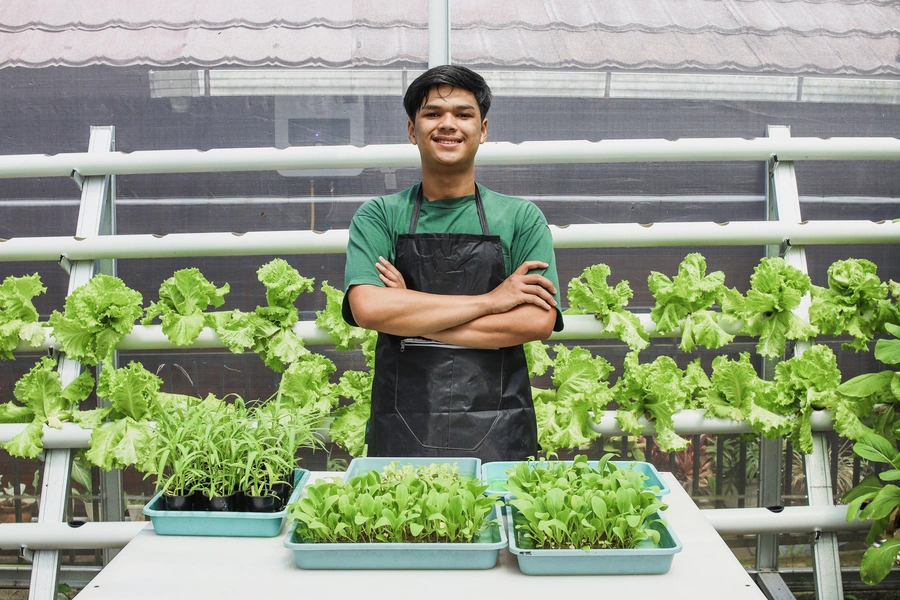
Plant roots are supported using materials like coco peat, rockwool, or clay pellets, while nutrient-rich water is circulated or supplied to the roots.
This controlled system allows faster plant growth, better resource use, and higher productivity compared to traditional farming.
Best Crops for Hydroponic Farming in Pakistan
Not all crops are suitable for hydroponics. In Pakistan, farmers usually focus on fast-growing and high-demand vegetables.
Common hydroponic crops include:
• Lettuce
* Spinach
* Coriander
* Mint
* Basil
* Kale
* Green onions
* Tomatoes
* Cucumbers
These crops have strong local demand and grow well in controlled environments.
Types of Hydroponic Systems Used in Pakistan
Several hydroponic systems are being used in Pakistan based on budget and scale:
Nutrient Film Technique (NFT): Popular for leafy vegetables and small commercial setups.
Deep Water Culture (DWC): Simple system suitable for beginners and small farms.
Drip System: Used for larger crops like tomatoes and cucumbers.
Kratky Method: Low-cost, passive system often used in home gardening.
Climate Suitability for Hydroponics in Pakistan
Hydroponic farming is not heavily dependent on outdoor climate because it is usually done in controlled environments like greenhouses.
However, temperature management is still important. Most vegetables grow best between 18°C and 28°C.
In hot regions like Sindh and southern Punjab, cooling systems or shaded greenhouses are often required.
Setting Up a Basic Hydroponic System
Beginners in Pakistan can start with a simple hydroponic setup using affordable materials.
Basic setup includes:
• Water containers or pipes
* Net pots
* Growing medium (coco peat or clay balls)
* Nutrient solution
* Water pump (for active systems)
* Air pump (for oxygen supply)
A small home or rooftop system can be started with relatively low investment.
Nutrient Management in Hydroponics
Nutrients are the most important part of hydroponic farming because plants do not get food from soil.
Balanced nutrient solutions contain nitrogen, phosphorus, potassium, calcium, magnesium, and trace minerals.
Maintaining proper pH levels (around 5.5 to 6.5) is essential for healthy plant growth and nutrient absorption.
Water Usage and Efficiency
One of the biggest advantages of hydroponic farming is efficient water usage. In Pakistan, where water scarcity is a growing concern, this system can save up to 80–90% more water compared to traditional farming.
Water is recirculated in most hydroponic systems, reducing wastage and improving sustainability.
Cost of Hydroponic Farming in Pakistan
The initial cost of hydroponic farming depends on system size and technology level.
Small home setups can be started at a relatively low cost, while commercial greenhouses require higher investment due to infrastructure, automation, and climate control systems.
Although initial costs are higher than traditional farming, long-term returns are often significantly better due to higher yield and faster crop cycles.
Profit Potential of Hydroponic Farming
Hydroponic farming in Pakistan has strong profit potential, especially for leafy vegetables and herbs.
Farmers can achieve multiple harvests per year, increasing overall income from a small area of land.
High-quality, pesticide-free produce also sells at premium prices in urban markets, supermarkets, and restaurants.
Common Challenges in Pakistan
Despite its benefits, hydroponic farming in Pakistan faces some challenges.
High initial investment and lack of technical knowledge are major barriers for beginners.
Power shortages can also affect automated systems, especially in rural areas.
Limited awareness and training facilities further slow down adoption in some regions.
Solutions to Improve Hydroponic Adoption
Government support, training programs, and private sector investment can help expand hydroponic farming in Pakistan.
Affordable systems and local manufacturing of hydroponic equipment can also reduce setup costs.
Education and awareness campaigns can help farmers understand the long-term benefits of this technology.
Role of Technology in Hydroponic Farming
Modern hydroponic systems often use technology such as sensors, timers, and automated nutrient delivery systems.
Smart farming tools help monitor water levels, nutrient balance, and plant health in real time.
Mobile apps and digital monitoring systems are also becoming more common in commercial setups.
Future of Hydroponic Farming in Pakistan
The future of hydroponic farming in Pakistan looks promising due to increasing urbanization and water scarcity issues.
More entrepreneurs and agricultural startups are investing in controlled environment farming systems.
As technology becomes more affordable, hydroponics is expected to become a mainstream farming method in the coming years.
Conclusion
Hydroponic farming in Pakistan offers a modern, efficient, and sustainable way to grow vegetables with high yield and low water usage. Although it requires initial investment and technical knowledge, the long-term benefits make it a strong opportunity for farmers and entrepreneurs.
With proper training, government support, and increasing awareness, hydroponic farming can play an important role in improving food security and modernizing agriculture in Pakistan.