



Introduction to Hydroponic Farming
Hydroponic farming is a modern agricultural system where plants grow without soil, using nutrient-rich water solutions instead. Instead of depending on traditional land-based farming, plants receive all essential nutrients directly through water, allowing faster growth and higher productivity.
This system is becoming increasingly popular in urban areas and regions with limited fertile land because it offers higher yield, controlled environment farming, and efficient resource usage.
How Hydroponic Farming Works
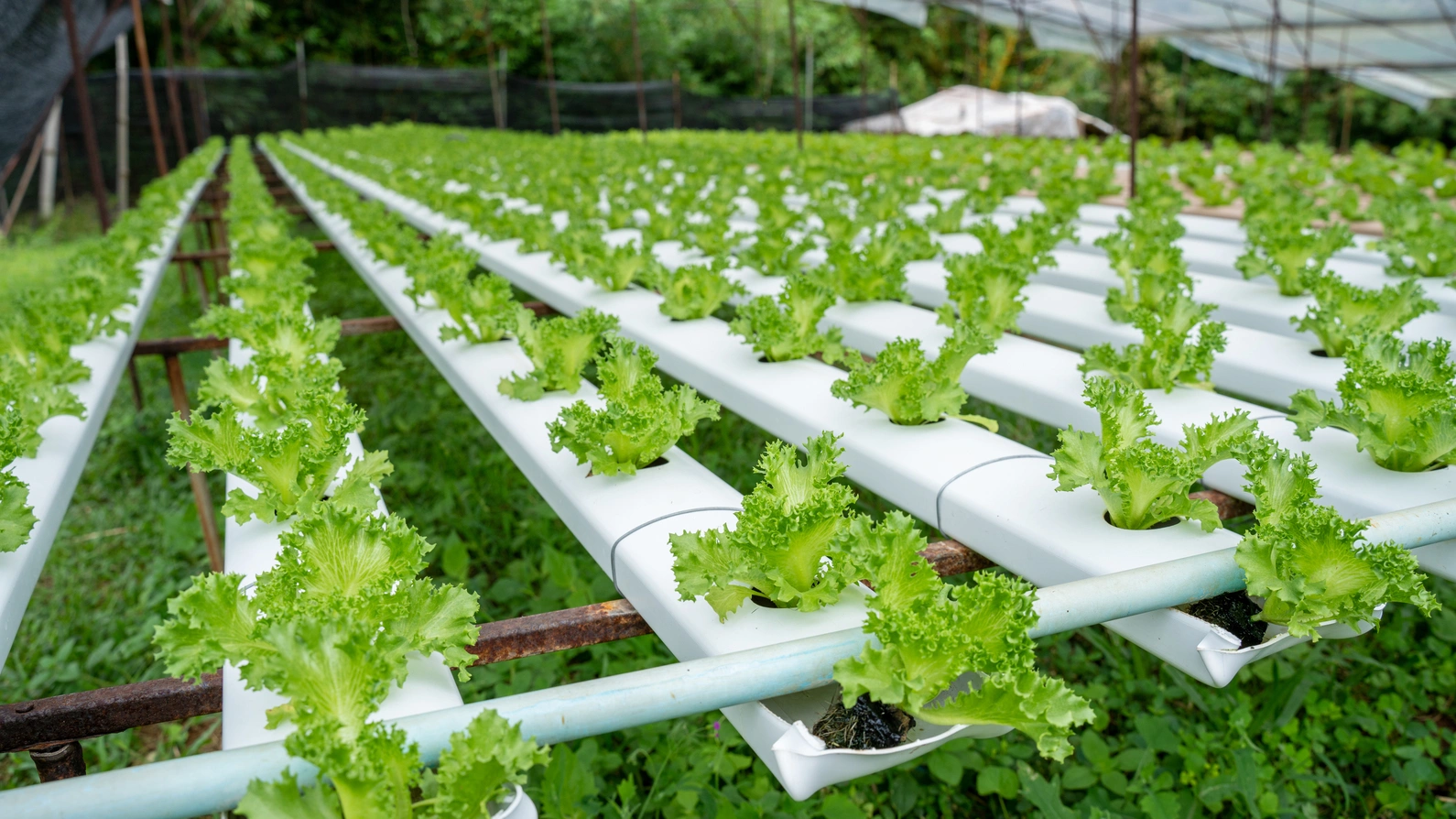
In hydroponics, plants are grown in a controlled environment where their roots are supported using materials like coco peat, perlite, rockwool, or clay pellets instead of soil.
Nutrient solutions containing essential minerals are delivered directly to plant roots through water circulation systems.
This method ensures plants get exactly what they need for optimal growth without soil-related limitations.
Types of Hydroponic Systems
There are several types of hydroponic systems used depending on crop type and scale of farming:
• Nutrient Film Technique (NFT)
* Deep Water Culture (DWC)
* Drip System
* Ebb and Flow System
* Aeroponics
Each system has its own advantages, but all focus on efficient nutrient delivery and controlled plant growth.
Advantage 1: Higher Crop Yield
One of the biggest advantages of hydroponic farming is significantly higher yield compared to traditional farming.
Since plants receive nutrients directly and grow in optimized conditions, they grow faster and produce more output in less time.
In many cases, hydroponic systems can produce 2–3 times more yield per square meter than soil-based farming.
Advantage 2: Faster Plant Growth
Hydroponic plants grow faster because they do not waste energy searching for nutrients in soil.
All essential nutrients are available directly in the water solution, allowing plants to focus energy on growth and production.
This results in shorter crop cycles and more harvests per year.
Advantage 3: Water Efficiency
Hydroponic farming uses up to 90% less water compared to traditional farming methods.
Water in hydroponic systems is recycled and reused, reducing wastage significantly.
This makes it highly suitable for regions facing water shortages or drought conditions.
Advantage 4: No Need for Fertile Soil
Hydroponic farming eliminates the dependency on fertile land. Plants can be grown in areas where soil quality is poor or completely unavailable.
This opens opportunities for farming in urban areas, rooftops, deserts, and indoor environments.
It also reduces land acquisition costs for agricultural production.
Advantage 5: Reduced Pest and Disease Problems
Since hydroponic systems do not use soil, many soil-borne pests and diseases are eliminated.
This reduces the need for chemical pesticides and makes crop production cleaner and safer.
Controlled environments also help prevent pest infestations, improving overall crop health.
Advantage 6: Space Efficiency
Hydroponic farming requires much less space compared to traditional agriculture.
Vertical farming techniques allow multiple layers of crops to be grown in the same area.
This makes hydroponics ideal for urban farming and commercial greenhouse setups.
Advantage 7: Year-Round Production
Hydroponic systems are often used in controlled environments like greenhouses, allowing farmers to grow crops throughout the year.
Weather conditions, seasonal changes, and climate variations have minimal impact on production.
This ensures consistent supply and stable income for farmers.
Advantage 8: Better Crop Quality
Crops grown in hydroponic systems are often cleaner, healthier, and more uniform in size and quality.
Controlled nutrient delivery ensures plants receive balanced nutrition, resulting in better taste, color, and texture.
High-quality produce also attracts premium market prices.
Advantage 9: Reduced Labor Requirements
Hydroponic systems are highly automated and require less manual labor compared to traditional farming.
Automated irrigation, nutrient delivery, and monitoring systems reduce the need for constant fieldwork.
This helps reduce operational costs and improves efficiency.
Advantage 10: Environmentally Friendly Farming
Hydroponic farming reduces soil degradation, water wastage, and chemical runoff into the environment.
It promotes sustainable agriculture by using fewer resources and producing less waste.
This makes it an eco-friendly alternative to conventional farming methods.
Profit Potential of Hydroponic Farming
Hydroponic farming offers strong profit potential due to high yield, fast crop cycles, and premium pricing of produce.
Leafy vegetables like lettuce, spinach, coriander, and herbs are especially profitable because they grow quickly and are in high demand.
Farmers can achieve multiple harvests per year, increasing overall income from a small area of land.
Cost of Starting Hydroponic Farming
Initial setup costs for hydroponic farming can be higher compared to traditional farming due to equipment, infrastructure, and technology requirements.
Costs include growing systems, pumps, nutrient solutions, lighting (for indoor farms), and greenhouse structures.
However, long-term returns are usually higher due to increased productivity and reduced input costs.
Best Crops for Hydroponic Farming
Not all crops are suitable for hydroponics. The most profitable and commonly grown crops include:
• Lettuce
* Spinach
* Basil
* Mint
* Coriander
* Tomatoes
* Cucumbers
* Strawberries
These crops grow quickly and have high market demand, making them ideal for commercial hydroponic farming.
Challenges in Hydroponic Farming
Despite its advantages, hydroponic farming also has challenges. High initial investment and technical knowledge requirements can be barriers for beginners.
Power supply issues and system failures can affect crop production if not managed properly.
Regular monitoring of nutrient levels and pH balance is essential for successful farming.
Future of Hydroponic Farming
The future of agriculture is moving toward controlled environment farming systems like hydroponics.
With increasing urbanization, water scarcity, and land limitations, hydroponics is expected to play a major role in global food production.
Advancements in automation, AI, and smart farming technology will further improve efficiency and profitability.
Conclusion
Hydroponic farming is a powerful modern agriculture system that offers high yield, faster growth, and efficient resource usage.
Although it requires initial investment and technical knowledge, the long-term benefits include higher profits, better crop quality, and sustainable production.
For farmers and entrepreneurs looking to enter future-ready agriculture, hydroponic farming is one of the most promising and profitable options available today.